


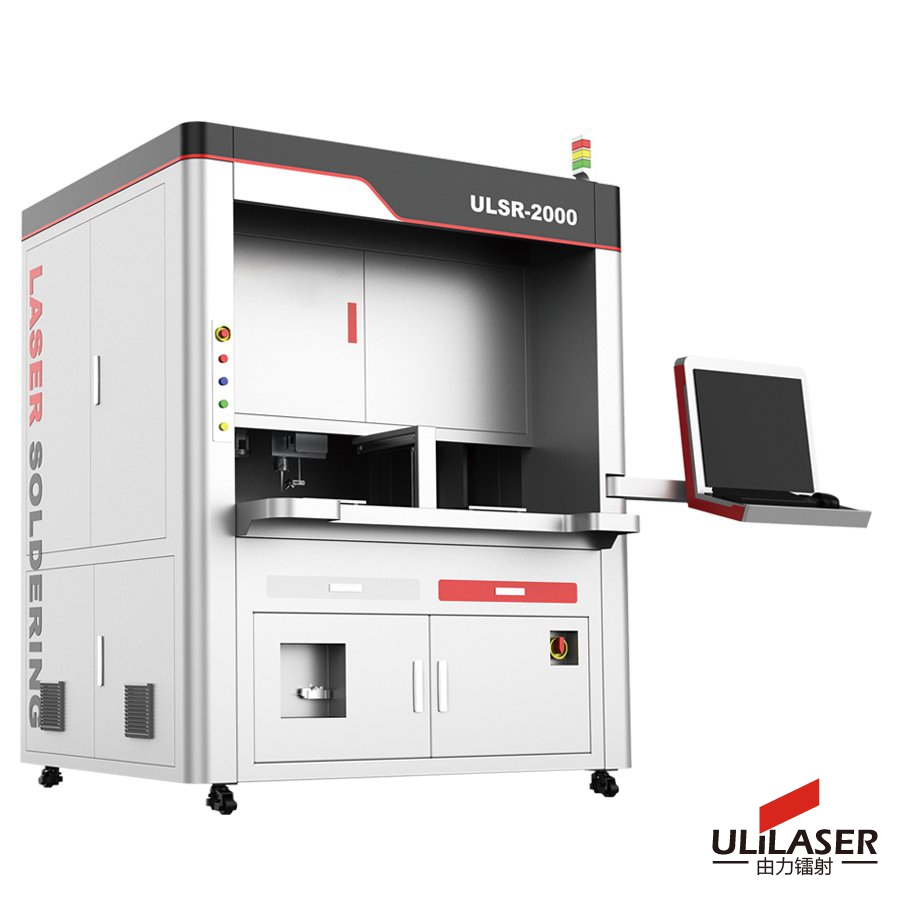
Head-Up Display systems are heat-sensitive and alignment-critical. Laser soldering lets manufacturers hit both targets simultaneously.
Head-Up Display (HUD) is no longer a premium extra. It is becoming standard on new vehicles — and as HUDs get brighter and smaller, manufacturers are running into a problem the old soldering methods cannot solve: HUD optics are extremely sensitive to heat and mechanical stress.
Why conventional soldering fails on HUD
A typical HUD module contains a projection lens, combiner mirror, display panel and multiple support brackets — all thermally mismatched and tightly packed. Wave soldering, iron soldering and even reflow all produce heat-affected zones large enough to bend the lens or shift the mirror mount. The result: ghost images, beam drift and — worst of all — inconsistent HUD performance from module to module.
How laser soldering solves it
Laser soldering delivers energy locally and instantaneously. ULiLASER’s closed-loop process keeps the heat-affected zone under 0.05 mm, which means glass lenses show zero post-soldering deformation. The AA pre-alignment step (integrated with the laser) calibrates projection lens, mirror and display panel together before a single joint is made — eliminating ghost-image root causes before they exist.
Three things we see on production lines today
- Solder-joint strength is 30% higher than reflow while keeping thermal stress minimal
- HUD module yield climbs from 90% to 98%+
- Positioning precision of critical components improves to ±0.005 mm
Ready for AR HUD
As AR-HUD modules enter production with even more complex optical stacks, the laser-soldering + AA combination becomes the only sensible choice. ULiLASER is currently validating production processes for next-gen AR-HUD units with two European Tier-1s.
If you are hearing the question “how do we hit 99% yield on HUD” on your line — the answer starts with laser soldering.