


Choosing a suitable laser soldering process helps manuf […]
Choosing a suitable laser soldering process helps manufacturers meet joint quality and production requirements. The selection depends on factors such as joint design, solder material, workpiece structure, and automation needs.
Laser soldering systems can use different solder application methods, including wire feeding, paste dispensing, ball feeding, and solder ring winding. Each method has its own material delivery arrangement and application requirements.
This guide outlines the main methods and key factors to consider when selecting a suitable laser soldering process.
1. Solder Wire
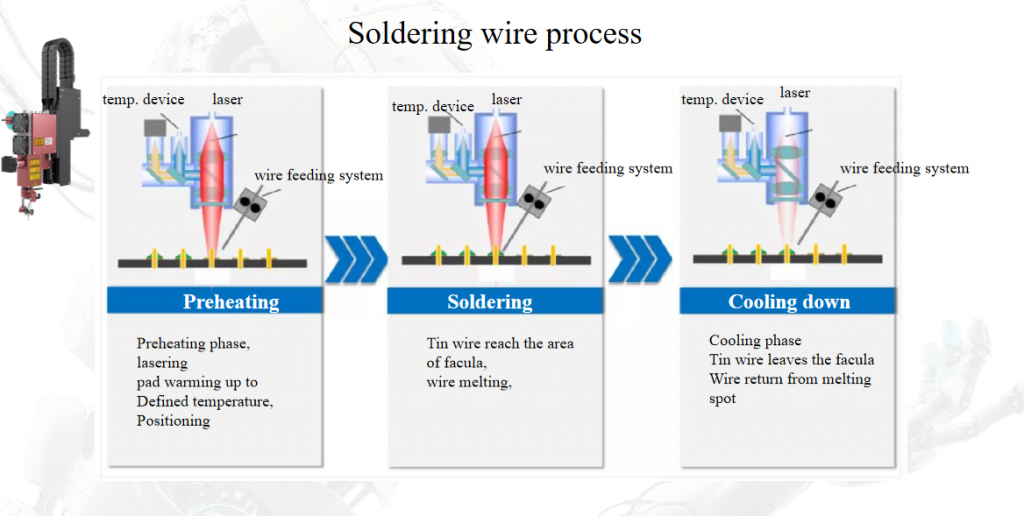
Solder wire feeding delivers wire to the target area through a wire feeding system while the laser heats the soldering point.
The process typically involves preheating the target area, feeding and melting the solder wire, and allowing the joint to cool.
What to consider: Evaluate joint accessibility, wire positioning, feeding consistency, and coordination between wire delivery and laser heating. Application testing can help determine whether the method suits the intended joint and production process.
2. Solder Paste
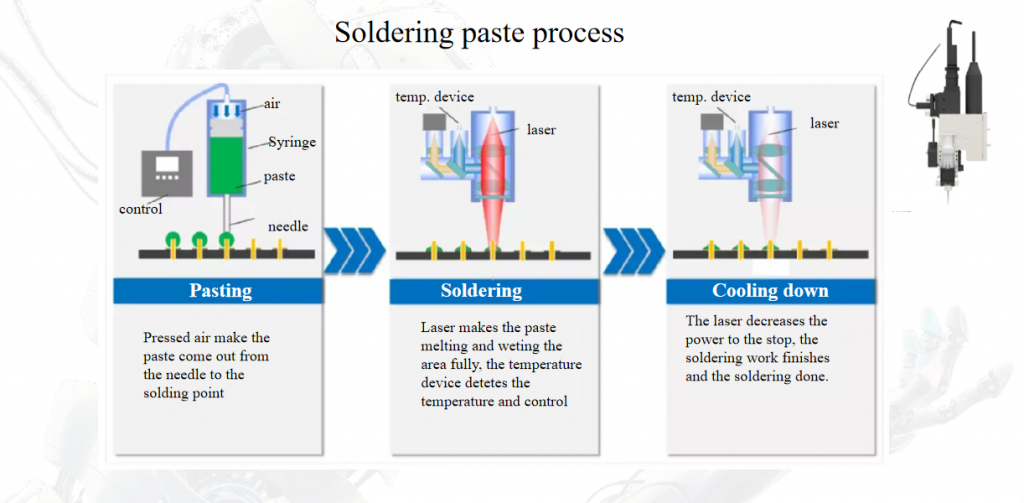
Solder paste dispensing uses a syringe and needle to apply paste to designated soldering points. In the illustrated configuration, compressed air pushes the paste through the needle before the laser heats the target area.
During soldering, the paste melts and wets the target area. Laser power is then reduced to end the heating stage and allow the joint to cool.
What to consider: Check the paste application requirements, dispensing accuracy, material compatibility, and temperature control needs. Confirm that the dispensing system and laser configuration are suitable for the target application.
3. Solder Ball
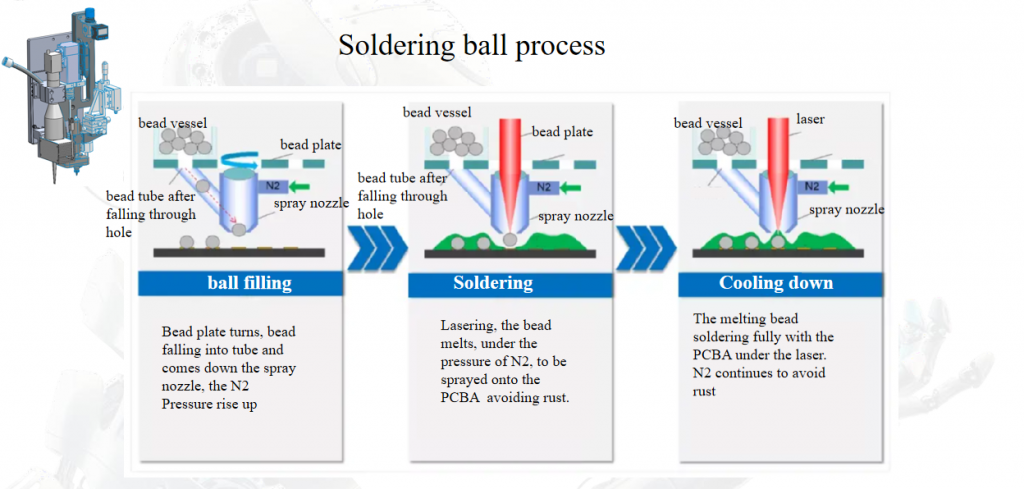
Solder ball feeding delivers individual solder balls to the target area. In the illustrated system, a rotating bead plate releases the balls into a tube, which guides them toward a nozzle. Nitrogen is supplied during soldering to help limit oxidation.
The laser melts the delivered solder ball, and the joint then cools and solidifies.
What to consider: Evaluate ball delivery, nozzle positioning, joint geometry, and the coordination between solder feeding and laser heating. Confirm that the system can deliver the solder balls reliably under the intended process conditions.
4. Solder Ring Winding
Solder ring winding is used to form solder wire into rings for automated soldering applications. ULiLASER’s automatic solder ring winding module features adjustable ring diameters and is designed for automated production involving connector pins.
When selecting a solder ring winding solution, manufacturers should consider the required ring diameter, connector pin geometry, and compatibility with the intended soldering process. Application testing can help verify whether the ring specifications and equipment configuration meet production requirements.
5. How to Choose the Right Method
Before selecting a solder feeding method, evaluate these four factors:
- Joint design and accessibility: Can the feeding mechanism reach the target joint and deliver solder at the required location?
- Solder material: Does the method support the required solder form and material?
- Process control: What positioning, laser heating, temperature monitoring, or other control functions does the application require?
- Production requirements: Can the proposed configuration integrate with the production workflow and meet the required process consistency?
No single feeding method is best for every application. The final choice should be based on the actual workpiece, process requirements, and equipment configuration.
6. Validate the Method Before Production
Before making a final equipment decision, test the proposed feeding method using representative workpieces and the intended solder material. Evaluate the resulting joints against the application’s quality requirements, and confirm that the process can be implemented reliably in the intended production environment.
ULiLASER provides laser soldering equipment and process solutions for different manufacturing requirements.
Contact ULiLASER to discuss your application and arrange free laser soldering sample testing.