


Integrating Active Alignment, precision laser soldering and 3D AOI on one automotive camera line lifts throughput while guaranteeing image quality.
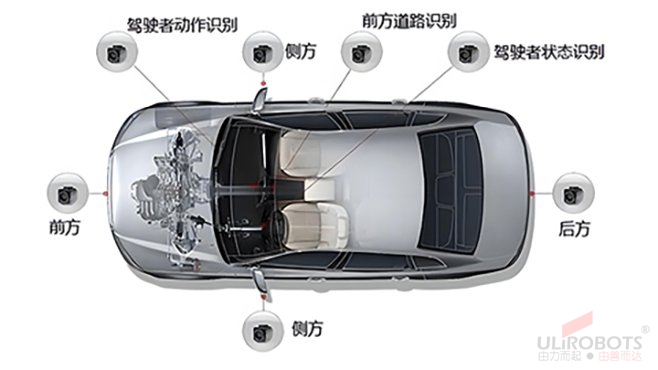
As autonomous driving matures from L2 to L4, every vehicle carries more cameras — and each camera is becoming denser and more precision-critical. The bottleneck on many automotive-camera lines is no longer individual step performance; it is how well AA (Active Alignment), laser soldering and 3D inspection work as one system.
The three steps, integrated
- Active Alignment holds lens-to-sensor parallelism at micron accuracy. Six-axis stages + laser displacement sensors keep optical-axis deviation under 1.5 μm.
- Laser Soldering joins sensor pads and lens modules with a heat-affected zone of 0.1 mm or less — no thermal stress on glass optics.
- 3D AOI then checks alignment, joint shape and residual stress before the module moves to the next station.
Each step feeds data back to the other two: the 3D AOI result tells the AA stage where the next lens should be aligned; the laser profile is adjusted on-the-fly if AA reports lens position drift.
What throughput looks like
One Tier-1 we work with used to run AA, wave soldering and 2D inspection as three separate lines. After integrating them on one ULiLASER platform,
- Throughput climbed from 600 to 1 650 modules per hour — more than a 2.7× increase
- First-pass yield moved from 86% to 99.1%
- Line operators dropped from 12 to 3
What quality looks like
Edge distortion dropped from 7.5% to 1.8%. Field complaints related to camera alignment fell 62% within six months. ULiLASER’s platform is already in volume production at multiple 8 MP+ Tier-1 lines.
AA + laser + 3D is not three machines. It is one throughput engine — and it is how Tier-1s are making their camera lines fit for L4 autonomous driving.